Patternflow
Four knobs. The pattern answers as you turn them.
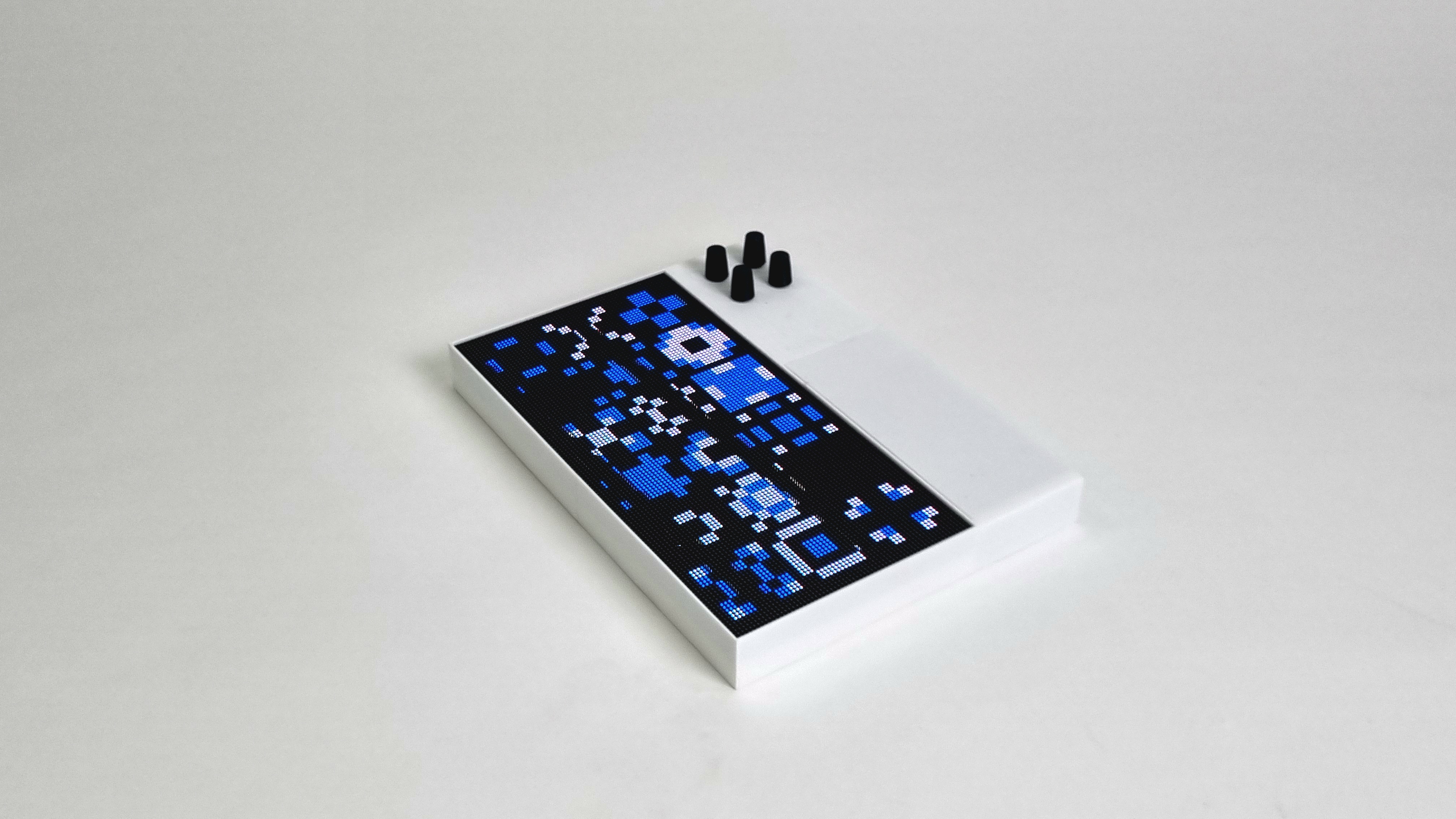
Every Patternflow plays every pattern we make.
Around 40 people have made one so far.

Build your own.
Around US$100–200 and an hour of hands-on work.
Breadboard, laser-cut, or an older v2 board? Every route is in the assembly map.
Make and flash patterns.
Write it here, watch it on the device, flash it from the browser.
Pattern Lab ↗
The full studio — batch generation, color ramps, and ESP32 C++ compile.
02Community ↗
Share what you make, fork what everyone else made.
The build server compiles your pattern into firmware in the browser. The Arduino IDE is only for new firmware features or a different matrix size.
Plug the ESP32-S3 into the left USB-C port. Sets up Wi-Fi and boots into Origin, then the Basics pack adds 33 more in one click.
Flashing guide ↗ for the steps, the port, and what to do if the board doesn’t show up.
Chrome / Edge onlyInside the work.
Builds, projects, and places where Patternflow comes to life.
Pick a marker or a title to explore.
- Orange, in the garden
- The first sale
- A gift, for the patterns
- Wooden case
- Shoulder-strap case
- In the DJ booth
- SimonePDA’s build
- Black enclosure
- MOTIFLOW
- Raspberry Pi port
- Paper & acrylic diffuser
- Nath’s build
- The second build
- The first build
Made something with Patternflow, or used it somewhere? Send a link or a photo and I'll add it here.